Physical and intellectual access to information and collections. is “the fundamental mission of the library and information workforce, supporting an informed and inclusive society. Access includes both the opportunity and right to use resources.” (ALIA Code of Ethics for the Australian Library and Information Services Workforce) and this is echoed in many documents from professional library associations around the world.
The American Library Association has identified the core values that define, inform and guide the professional knowledge, practice and commitment of librarianship as being
- access
- confidentiality and privacy
- democracy
- diversity
- education and lifelong learning
- intellectual freedom
- preservation
- the public good
- professionalism
- service
- social responsibility
The first clause of the IFLA Code of Ethics states “The core mission of librarians and other information workers is to ensure access to information for all for personal development, education, cultural enrichment, leisure, economic activity and informed participation in and enhancement of democracy. To this end, librarians and other information workers reject censorship in all its forms, support provision of services free of cost to the user, promote collections and services to potential users, and seek the highest standards of accessibility to both physical and virtual services.”
Even without such esteemed, formal documents, as coal-face practitioners we have a responsibility to provide opportunities and resources which reflect a wide variety of perspectives which will encourage critical thinking and help our students make informed decisions. Therefore, at times, students may be exposed to materials which present information, ideas or attitudes which some members of the school community may consider to be controversial, inappropriate or offensive, and raise concerns, questions and calls for the immediate removal of resources. Objections to these resources are an important part of the democratic process and should be treated as legitimate avenues of communication in education.
More recently, teacher librarians have also been required to not only examine the content of resources in relation to their suitability for their clientele, but also the character of the creators as some are publicly disgraced by being charged with criminal offences. While this is not a new phenomenon, and many favourite and popular authors and artists have held opinions and taken actions that are deplored in today’s society, the rise of and access to technology, and the tendency to condemn and cancel anything that we disagree with without evidence or investigation, has meant that such charges are instant headline news and calls for immediate action are loud, universal and incessant.
This is particularly true when those charges are laid against well-known, popular and respected authors, and even moreso, when the charges relate to crimes against children by those who write for children. Public outrage and official directives in response to that, can see the teacher librarian caught between both their personal and professional opinions as well as their commitment to their professional practice and their employer’s demands, and above all, the protection of the children in their care. And while such incidences might be rare, there have been enough of late to spark discussion and debate amongst the TL community.
But while the charges, particularly those against children are abhorrent, the issues underlying the decisions we make and the actions we take are complex and involve striking a balance between child protection, student wellbeing, community trust and expectation, professional responsibility and ethics, pressure from executive and education authorities as well as respecting the rights of all those involved. Unless it is determined that students’ physical, intellectual or emotional wellbeing are at immediate risk because of access and exposure to the author’s writings, in which case they would be removed immediately and a review of how they were added to the collection initially undertaken, any decisions and actions demand a carefully considered response rather than a knee-jerk reaction or one driven by public pressure or the fear of controversy.
So many questions are raised…
- Do we succumb to public outrage and remove resources by these authors immediately from the collection?
- Are they temporarily withdrawn until the outcome of any court case is known?
- Is the art separated from the artist and left available to our students because of our adherence to those official policies? Is the artist’s work defined by who they are as a person regardless of literary or artistic merit and suitability for its intended audience? How have their personal actions influenced their writing and through that, the thoughts and actions of their readers?
- If we remove one person’s work are we obliged to remove all works by all authors who have or have had a dubious personal life or who subscribe to particular beliefs or values systems that are no longer sustainable?
- Are our professional standards and practices overruled by those less-informed further up the hierarchy?
- Do we ignore the underlying principle of our justice system that is a person is innocent until proven guilty? If we do act before the outcome of any court case, what message are we sending to students, particularly those old enough to be undertaking courses in legal studies, about due process, trial by media, punishment before conviction and so on?
- Can the situation be used as teaching opportunity to raise awareness and develop critical thinking about the issue?
- Can there be a balance struck that supports the victims of the charges; recognises and supports the contribution of others, such as illustrators, involved in the production of the resources; and the rights of the accused person?
- Can we set aside our own personal beliefs and prejudices so that we can “place principle above personal opinion and reason above prejudice” as required by the ASLA School Library Bill of Rights?
- How will our decisions and actions impact the fans of the accused? Will they be seen as guilty by association? How do we address the potential withdrawal of books by a favourite author in a way that is age/maturity appropriate for the fan?
- How will our decisions and actions challenge, change or reflect the narrative of today in the future? Will they rewrite or obliterate the current state of play? How will they be scrutinised in the future, particularly if they are driven by a particular current political agenda?
Thus the decisions and actions of the teacher librarian are challenging and complex and must be considered carefully with regard to all those factors and walking a fine line between the demands of all the stakeholders which can extend well beyond the accused and their readers. They also demand a carefully considered response rather than a knee-jerk reaction or one driven by public pressure or the fear of controversy. Therefore they must be made so that
- they demonstrate an informed resolution that is defendable through evidence and transparent in its process
- consistency and fairness are ensured with consideration of any precedent which may be set
- professional integrity, knowledge and practice is clearly demonstrated
- intellectual freedom has been respected and upheld so that we, as individuals, do not allow our personal opinions and prejudices to dictate what we purchase and include in the collection or recommend to staff and students
- the school’s values and ethics have been reflected
In her blog post To remove or Not to Remove, Krystal Gagen -Spriggs from Charles Sturt University explores these issues in greater depth with reference to some excellent articles, as she unpacks what has become a seemingly more-common issue in recent years. She raises many issues to consider and these will have different responses relevant to the particular situation of the reader.
First and foremost though, we must consider the impact of the event and our responses on our students, viewing their potential responses through the child’s lens rather than our more mature adult perspective.
In a post on her Facebook page on January 16, 2025 author Tania McCartney expressed some very pertinent points that must be considered because as she demonstrates, charges are not laid without there having been a through an investigation and an almost watertight case built and that as well as the direct victims of the perpetrator, there are also indirect victims which may include the students in out schools. My interpretation of some of the points she raises are
- The perpetrator may seem, on the surface, to be a thoroughly likeable person who is “trusted, charming and respected” – may have even visited the school – and yet this is how they gain access to the child. They are not physical monsters with a badge or other warning label and thus, that likeability makes it hard to believe that they could have done the things they are charged with. So as well as feeling duped because we have been taken in by the external persona and not wanting to admit that, it builds a character defence for the perpetrator. A child may interpret that as the perpetrator having the approval, support and acceptance of the author regardless of any accusations.
- Because we can’t believe someone would do what they are accused of, we begin to doubt the quality of the investigation, the validity of the evidence and perhaps lessens the desire to act quickly. Such disbelief, even after a person is charged and despite the depth of the police investigation and evidence gathered, “softens agency and blurs who was harmed versus who caused harm.” If adults, with their world experience have been fooled, can we expect children to be more perceptive?
- While our criminal law system may be founded on “innocent before proven guilty”, there is a difference between ” criminal punishment processes [and] institutional responsibility or risk management.” Although we may feel we are respecting the law, McCartney believes this “misuses a legal principle to justify inaction” and “prioritises procedural comfort over child safety and keeps harmful figures culturally and systemically protected”. We must, at all times, remember we are working in “child-facing spaces” and duty of care is our priority.
- Although we may believe that the art should be separated from the artist, and thus continue to provide access to the works until Court proceedings have reached their conclusion, such exposure “keeps the author visible, recommended and socially endorsed.” Their income and reputation are maintained and students see this as supporting the perpetrator and possibly diminishing or dismissing the seriousness of the situation.
With Tania’s permission I have copied and pasted the full text of her post here…
However, in the meantime, teacher librarians are required to demonstrate leadership, perhaps beyond following any directives from authorities, perhaps answering student questions or initiating conversations with staff and students based on the points of view that have been shared.
As an administrative starting point, they should revisit their Collection Polices, especially the Challenged Material Policy, and, in consultation with Executive, staff, community representatives and, where appropriate, students, and determine what procedures should be undertaken in the event of these circumstances arising. Sadly, the case currently making the headlines is just the latest in a string of such events recently. An example of what might be included is available in the Challenged Materials Policy of my Sample Collection Policy. It should be stressed that this is a suggestion only and many factors will come into play including the age and maturity of the students and the beliefs, values and ethics of each school.
The current situation regarding the charges laid against the author of one of the most popular books in recent times – indeed, a CBCA Book of the Year Award winner – has raised much discussion and debate in online TL forums and while there is a diversity of opinion, the call for guidance about how to respond from professional leadership organisations is common. Perhaps these thoughts might start others thinking too so that the complexities of the situation can be examined from all angles. We need to demonstrate the critical thinking that we are the proponents of.
Further reading is available here.




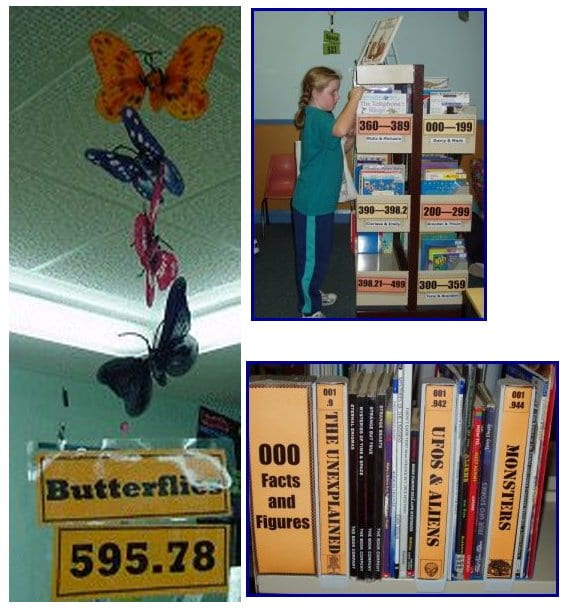



 What does your first week of “library lessons” look like?



 Your TL degree is so new and shiny that the dust hasn’t had time to settle on its frame yet, but in a few short weeks you are going to be stepping into your dream job – the one you’ve been thinking of for years and have undertaken hundreds of hours of gruelling study to achieve.